

Published in the European Journal of Endocrinology, this retrospective study introduces a new MRI biomarker: the “polystyrene bead sign.” This novel radiological sign enables the preoperative identification of hypothalamic papillary craniopharyngiomas with high precision, paving the way for a radical shift in management in favor of targeted therapies. Early identification of this tumor subtype is currently a major neuro-oncological challenge.
Le défi chirurgical et l’émergence des thérapies ciblées
Craniopharyngiomas are rare tumors (incidence of 0.19 per 100,000 people) that frequently adhere to critical structures of the skull base, particularly the third ventricle and the hypothalamus. Hypothalamic involvement affects up to 50% of patients requiring surgical intervention. Historically, resection of these lesions is associated with very significant morbidity, including severe eating behavior disorders, morbid obesity, and neurocognitive impairments. However, management is evolving rapidly: the papillary subtype (which accounts for around 20% of cases and occurs almost exclusively in adults) is characterized by the BRAF V600E mutation. This specific genetic profile shows very high response rates to BRAF/MEK inhibitors. Thus, reliable identification before surgery would make it possible to favor a simple confirmatory biopsy followed by targeted therapy, sparing patients a high-risk resection.What is the “polystyrene bead sign”?
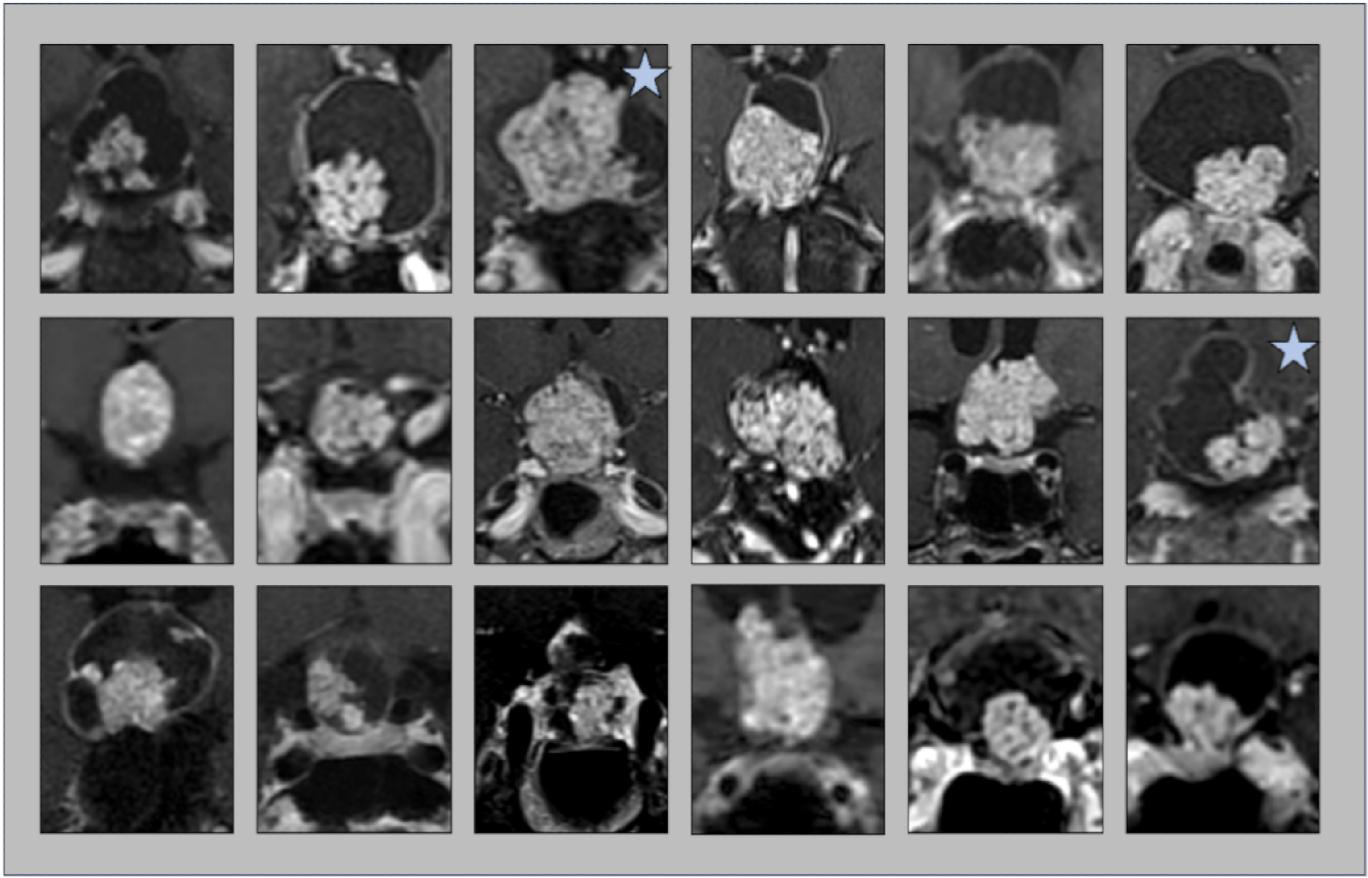
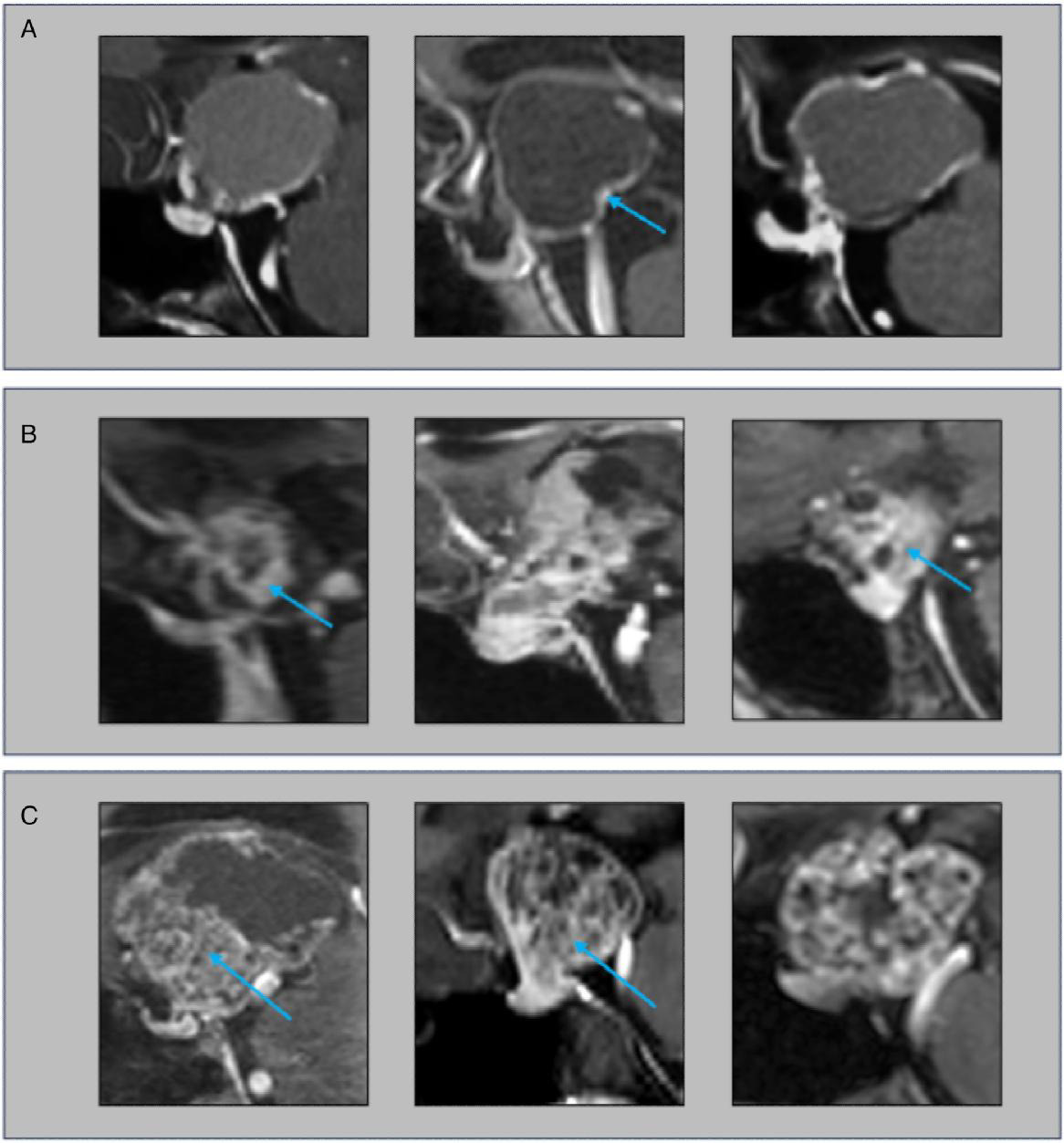
To date, conventional radiological features (often non-calcified tumors, presence of diverticula) have lacked the sensitivity and specificity required to safely modify the initial treatment strategy. The team has therefore defined this new MRI marker as a cluster of at least 20 small rounded nodules (1 to 2 mm in diameter) showing strong contrast enhancement. Visible on high-resolution post-contrast T1 sequences (in axial, coronal, and sagittal planes), these nodules are most often located within a cyst at the base of the third ventricle. Their visual appearance is very similar to that of true polystyrene beads. To be considered positive, this sign must appear in the absence of other types of enhancements typical of adamantinomatous forms, such as thick septations or reticular enhancement around microcysts.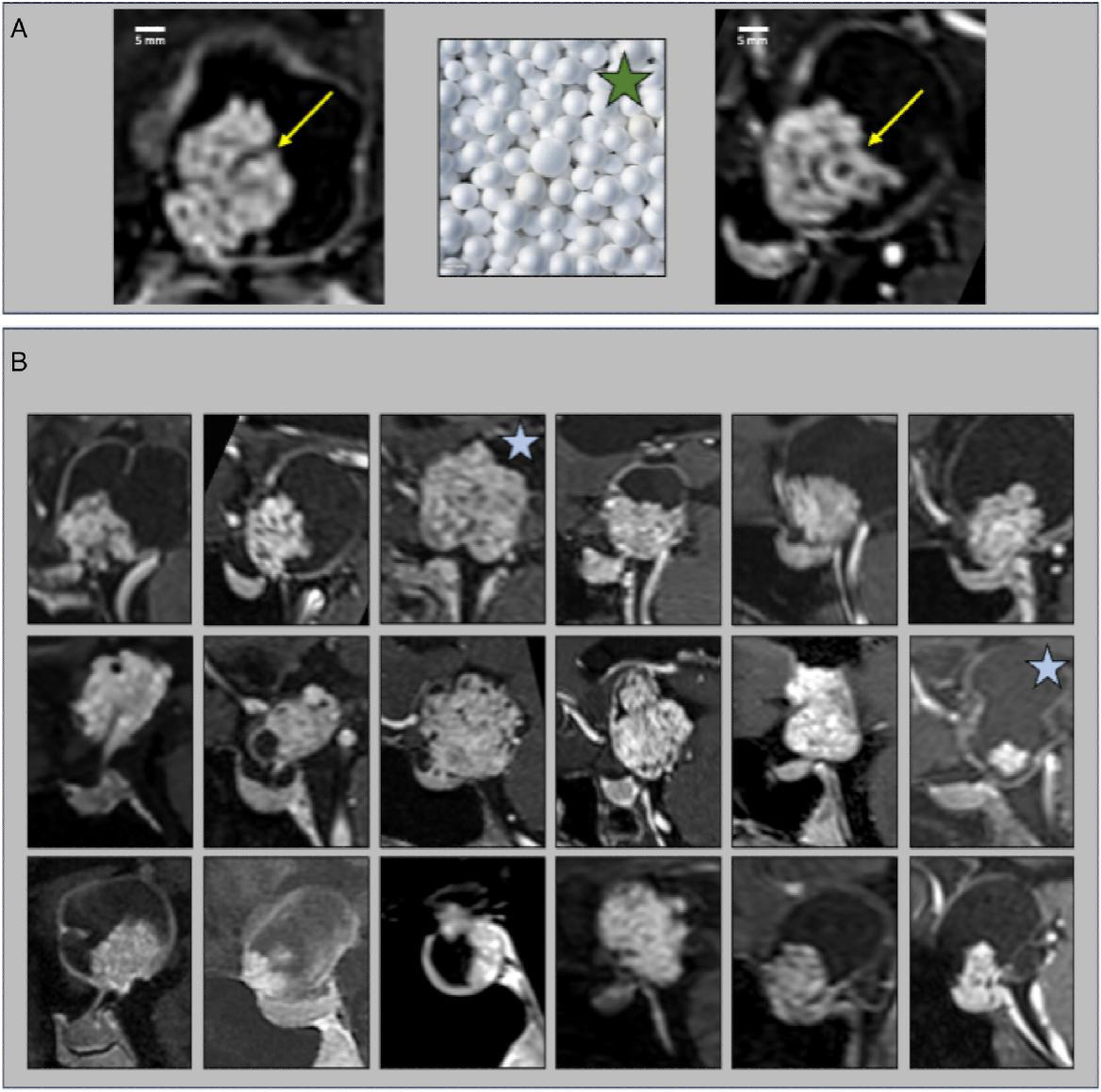
Rigorous validation with promising results
The study included a cohort of 61 adult patients with hypothalamic craniopharyngiomas (assessed between January 2005 and June 2025). To test the reliability of this sign, six independent clinicians reviewed the MRIs in a blinded manner, without knowledge of the histopathological results. Diagnostic performance proved excellent for identifying the papillary subtype:- A sensitivity of 92%.
- A specificity of 98%.
- An overall diagnostic accuracy of 96%.
Reference
- The polystyrene beads sign: a simple MRI marker for the preoperative diagnosis of papillary hypothalamic craniopharyngiomas. Eur J Endocrinol. 2026 Jun 22;194(6):857-865. doi: 10.1093/ejendo/lvag108. Consulter la publication ➤


